
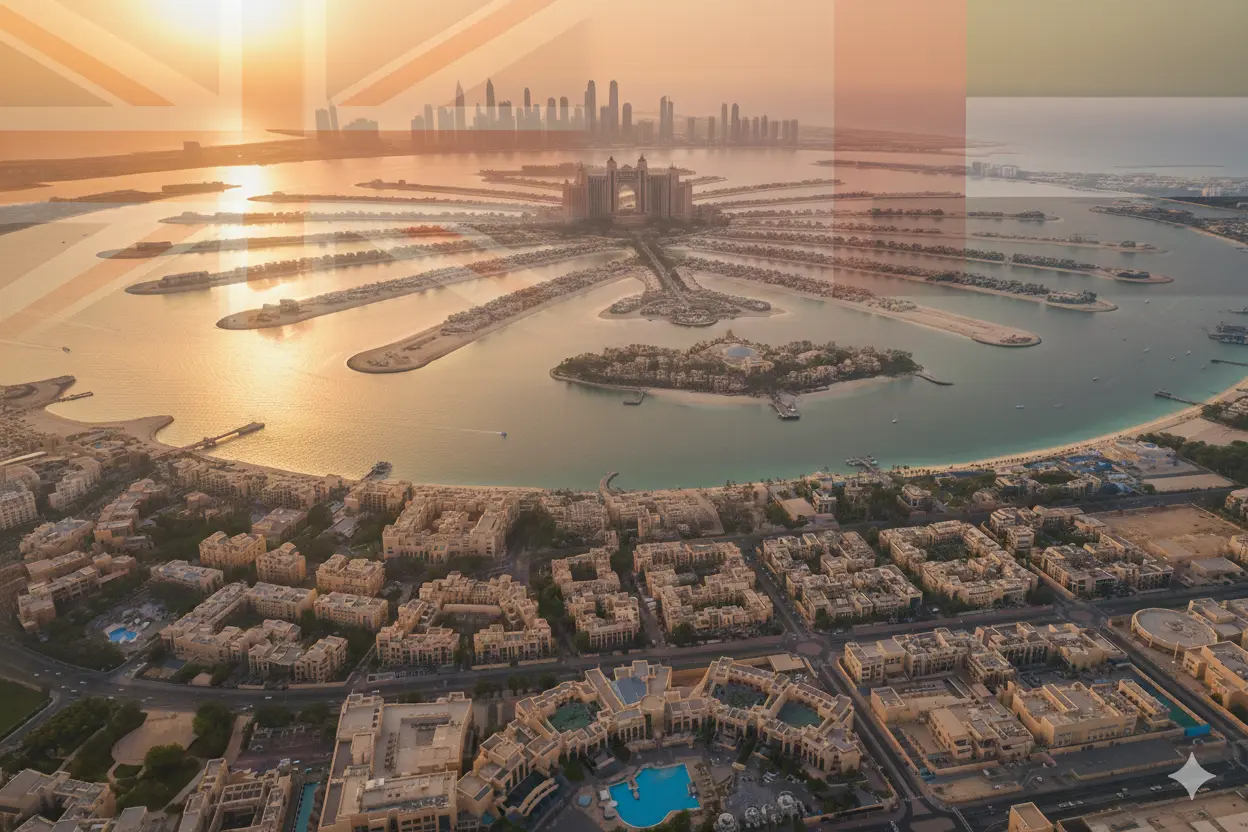
The Great Relocation: Why UK Investors Are Flocking to Dubai Real Estate in 2026
For decades, the path for British property investors was well-trodden: buy-to-lets in London, student housing in Manchester, or perhaps a holiday home in the Cotswolds. However, as we move through 2026, a significant tectonic shift is occurring. Driven by a combination of domestic tax pressures, high interest rates in the UK, and a maturing, tax-efficient market in the Middle East, UK investors now represent approximately 12% of all property transactions in Dubai.
This isn’t just a trend; it’s a strategic migration of capital. For the British investor, Dubai has transitioned from a speculative “frontier” into a stable, high-yield alternative that behaves more like a global financial hub than a desert oasis.
1. The “Push” Factors: Why Leave the UK Market?
The exodus of UK capital toward the Emirates is fueled by increasingly tight margins at home. British landlords are currently navigating a “perfect storm”:
- Taxation Squeeze: With UK Stamp Duty reaching up to 12% for high-end second homes and the abolition of mortgage interest tax reliefs, net profits are being cannibalized.
- Regulatory Burden: Stricter EPC (Energy Performance Certificate) requirements and evolving renter rights legislation have increased the “hassle factor” of managing UK portfolios.
- Yield Compression: In prime London areas, net yields often struggle to exceed 3–4%, barely keeping pace with inflation and borrowing costs.
2. The “Pull” Factors: The Dubai Advantage in 2026
In stark contrast, Dubai offers a fiscal environment that seems almost tailor-made for the frustrated British landlord.
Tax Efficiency
The most compelling draw remains the tax regime. In Dubai, investors enjoy 0% tax on rental income and 0% capital gains tax. When compared to the UK’s top income tax bracket of 45% and capital gains rates of up to 28% on residential property, the math becomes undeniable. A £500,000 investment simply works harder in Dubai than in Birmingham or London.
The Golden Visa: A Ten-Year Anchor
The UAE’s Golden Visa program has been a game-changer for 2026. By investing a minimum of AED 2 million (approx. £430,000) in property, UK citizens can secure a 10-year renewable residency.
Note: This visa allows for family sponsorship and—crucially for those still tied to the UK—does not require a minimum stay in the UAE to remain valid.
Market Maturity and Regulation
Gone are the days of the “Wild West” property booms. The 2026 market is defined by RERA (Real Estate Regulatory Agency) oversight, mandatory escrow accounts for off-plan projects, and a highly transparent title deed system via the Dubai Land Department (DLD).
3. Yield Analysis: Where the Numbers Land
In 2026, Dubai’s rental yields continue to outperform almost every major global city. While the market has moved from “explosive growth” to “sustainable stability,” the returns remain robust.
| Segment | Average Gross Yield (2026) | Top Communities |
|---|---|---|
| Mid-Market Apartments | 7.5% – 9.0% | JVC, Dubai Silicon Oasis |
| Prime Apartments | 5.8% – 7.0% | Business Bay, Dubai Marina |
| Villas & Townhouses | 4.8% – 5.5% | Dubai Hills, Arabian Ranches |
4. Top Investment Hotspots for UK Buyers
UK investors typically fall into three categories, each gravitating toward specific “pockets” of the city:
The Yield Hunter: Jumeirah Village Circle (JVC)
JVC is the “bread and butter” of the 2026 rental market. It offers a low entry price point with exceptionally high tenant demand from young professionals and families.
The Prestige Player: Palm Jumeirah & Dubai Creek Harbour
For those seeking “trophy” assets with high capital appreciation, the waterfront remains king. Palm Jumeirah continues to see scarcity-driven price growth, while Dubai Creek Harbour is favored by those wanting the “next Downtown.”
The Relocating Family: Dubai Hills Estate
Often dubbed the “Surrey of Dubai,” this area is the top choice for British expats due to its international schools (teaching the British curriculum) and championship golf course.
Important always to keep an eye on the new projets released by the top developers in Dubai.
5. The Digital Edge: Why Agencies are Moving to Real Estate CRMs
In the hyper-competitive 2026 market, the “handshake deal” has been replaced by data-driven precision. Leading Dubai agencies have moved away from fragmented spreadsheets in favor of specialized Real Estate CRMs (Customer Relationship Management) to manage the influx of international capital.
For UK investors, this technology provides a level of transparency and speed that was previously impossible. Agencies using advanced CRM platforms offer several distinct advantages:
- Instant Lead Response: In a market where prime units can sell out in minutes, CRMs allow agents to respond to inquiries instantly via automated WhatsApp and email workflows, ensuring UK buyers don’t miss out due to time zone differences.
- Automated Compliance: Modern CRMs are now integrated with RERA and DLD systems, automatically generating legally compliant contracts and tracking escrow payments to safeguard investor funds.
- Data-Driven Matching: Instead of manual searching, AI-powered “matchmaking” tools within these CRMs scan thousands of listings to find properties that hit a UK investor’s specific ROI or “Golden Visa” requirements.
- Transparent Investor Portals: Many agencies now provide buyers with a secure login to view their property’s performance, maintenance updates, and rental income in real-time—a crucial feature for those managing assets remotely from London or Manchester.
6. Managing the Risks: A Reality Check
- Currency Exposure: The UAE Dirham is pegged to the US Dollar. While stable, UK investors must watch the GBP/AED exchange rate for impact on purchasing power.
- Service Charges: Dubai uses a square-footage-based service charge. High-end buildings have maintenance costs that can shave 1–2% off your net yield.
- Oversupply: With new units entering the market, selectivity is vital. Properties near the Dubai Metro or established infrastructure remain the most resilient.
7. The 2026 Outlook: Logic Over Hype
The Dubai property market has entered a “disciplined” phase. For the UK investor, the goal is now building a tax-free “pension in the sun” that provides a hedge against the economic uncertainties of the British Isles. The 2026 market offers a level of sophistication and return that the UK currently struggles to match.